
Artificial intelligence has transformed the way developers write code, analyze data, and automate workflows. From startups to global enterprises, AI-powered tools have become an essential part of daily operations.
However, as organisations increase their reliance on AI, a new challenge is emerging: managing AI costs at scale.
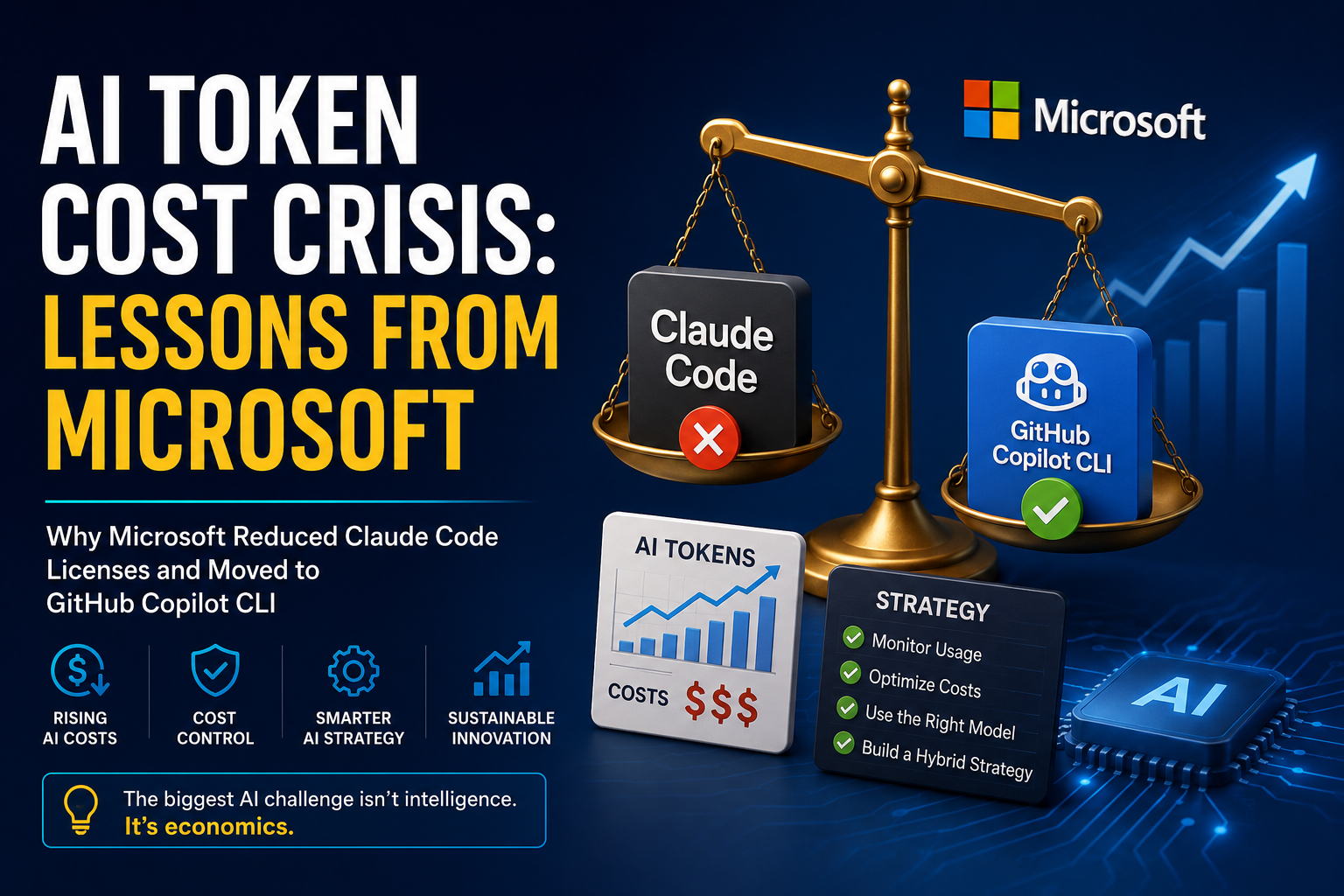
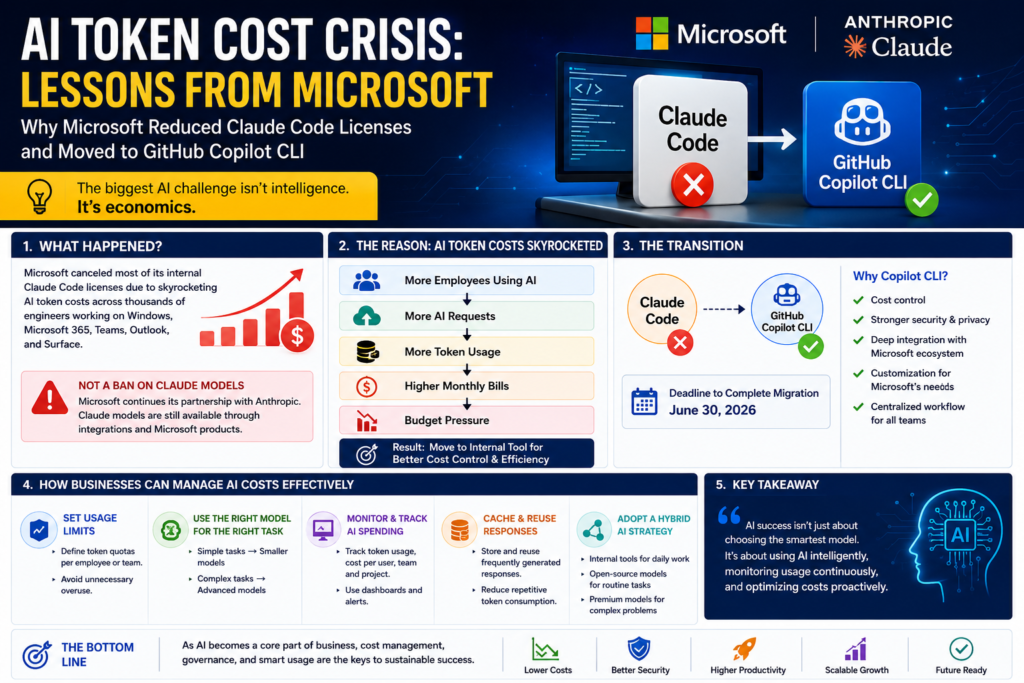
Microsoft recently made headlines by reducing most of its internal Claude Code licenses for engineers working on products such as Windows, Microsoft 365, Teams, Outlook, and Surface. While the company continues its partnership with Anthropic and still provides access to Claude models through various integrations, the decision highlights a growing concern across the technology industry—AI token costs.
This move serves as an important lesson for businesses investing heavily in artificial intelligence.
What Happened?
Microsoft observed a significant increase in Claude Code usage among its engineering teams. Developers were using AI for coding assistance, debugging, documentation generation, architecture reviews, and software optimization.
As usage increased, so did token consumption.
Since many AI platforms charge based on the number of tokens processed, large-scale adoption led to rapidly rising operational expenses. To improve cost efficiency and gain greater control over AI spending, Microsoft directed many employees to transition their workflows to GitHub Copilot CLI.
The change was not a rejection of Claude models. Instead, it was a strategic decision focused on optimizing AI economics.
Understanding AI Token Costs
Before discussing Microsoft’s decision, it is important to understand what AI tokens are.
A token is a unit of text processed by an AI model. Every prompt submitted to an AI system and every response generated consumes tokens.
For example:
- Writing code consumes tokens.
- Analyzing documents consumes tokens.
- Generating long responses consumes even more tokens.
When thousands of employees use AI daily, token consumption can reach billions per month.
The result is simple:
More Users → More AI Requests → More Tokens → Higher Costs
For enterprise organizations, even small increases in usage can create significant financial pressure.
Why Microsoft Shifted Toward GitHub Copilot CLI
1. Cost Optimization
The primary reason was cost control.
AI usage was growing faster than expected. By moving employees toward an internally managed solution, Microsoft could better monitor and optimize expenses.
2. Better Ecosystem Integration
GitHub Copilot CLI integrates naturally with Microsoft’s development environment, cloud infrastructure, and productivity tools.
This creates a smoother developer experience while reducing management complexity.
3. Improved Governance
Organizations require visibility into how AI tools are used.
Internal solutions provide stronger governance, compliance monitoring, and security controls compared to relying solely on external platforms.
4. Long-Term Scalability
As AI becomes embedded in every workflow, businesses must ensure their AI strategy remains financially sustainable.
Microsoft’s decision demonstrates a focus on long-term scalability rather than short-term convenience.
Why This Matters for Every Business
Many companies are currently experiencing what Microsoft encountered.
Teams begin by using AI for a few tasks.
Soon they use AI for:
- Software development
- Customer support
- Marketing content
- Data analysis
- Documentation
- Research
- Automation
As adoption expands, costs often increase faster than expected.
Without proper planning, organizations can face budget overruns despite productivity gains.
Five Strategies to Reduce AI Costs
Use the Right Model for the Right Task
Not every task requires the most advanced model.
Simple activities such as formatting, summarization, and document generation can often be handled by smaller, less expensive models.
Establish Usage Policies
Organizations should create clear AI usage guidelines.
This may include:
- Monthly usage limits
- Team-specific quotas
- Approval requirements for high-cost workloads
Monitor Cost Per Employee
Tracking token consumption helps identify patterns and opportunities for optimization.
Key metrics include:
- Cost per user
- Cost per team
- Tokens consumed per project
- AI productivity gains
Implement Caching
Many AI requests are repetitive.
By storing and reusing common outputs, businesses can significantly reduce token consumption.
Adopt a Hybrid AI Strategy
A balanced AI infrastructure may include:
- Internal AI tools
- Open-source models
- Premium commercial models
This approach allows organizations to balance cost, performance, and flexibility.
Microsoft’s Current AI Strategy
Microsoft continues to support multiple AI technologies.
Claude models remain accessible through integrations and partnerships, while GitHub Copilot remains a primary productivity platform for developers.
This demonstrates an important principle:
Successful AI adoption is not about choosing a single model.
It is about creating the right combination of tools for specific business needs.
The Future of Enterprise AI
The next phase of AI adoption will focus on efficiency rather than experimentation.
Organizations will increasingly evaluate:
- Cost per task
- Return on investment
- Productivity improvements
- Security requirements
- Scalability
The companies that succeed will not necessarily be those using the most advanced AI models. Instead, they will be the organizations that use AI intelligently and sustainably.
Conclusion
Microsoft’s Claude Code transition highlights a critical reality of modern AI adoption.
The challenge is no longer whether AI can improve productivity.
The challenge is how organizations can scale AI responsibly while maintaining cost efficiency.
As businesses continue investing in artificial intelligence, they must balance innovation with financial sustainability. Microsoft’s decision serves as a valuable reminder that successful AI strategies require more than powerful technology—they require careful planning, monitoring, and optimization.
Organizations that focus on both performance and cost management will be best positioned to benefit from the future of AI.
Leave a Reply